
Accomack County Former Owner Record Sources
Accomack County offers a documented land-record trail. It runs far deeper than the online index describes. The Clerk's public records room traces public searching back to 1663. No earliest year appears on the online SRA page. For the older layers, the Library of Virginia catalog supplies the reference path. Match each collection's exact title and years to the era you need. Keep the parcel's legal description with you as you move between them.
| Source | Years It Covers | Where Held | What It Shows |
|---|---|---|---|
| Virginia SRA deed index | Online start year not published | Accomack Circuit Clerk / SRA | Recorded parties and land instruments |
| Grantor and grantee indexes | 1663-1799; later runs include 1877-1969 | Clerk and Library of Virginia catalog | Party names linked to book references |
| Deed books and land causes | Deeds/wills from 1663; cataloged runs extend through later eras | Clerk / LVA microfilm | Recorded conveyances and older land matters |
| Annual land books | 2015-2026 | Accomack County | Dated owner-of-record snapshots |
A recent transfer usually surfaces through SRA or the Clerk. When the online results run out, turn to the historic collection years instead of assuming the modern search covers everything. Annual land books can date an assessment name. They do not replace the deed chain. Every step needs the party names plus a matching legal description, parcel clue, or instrument citation.
Accomack County's Online Deed Cutoff
The Accomack County land-record page publishes no earliest year for SRA. Keep that in mind before giving up. The historic catalog and the modern access system are simply different tools. So a failed online search does not prove that earlier deeds are missing. When a current record stays unclear, use the Clerk's counter or contact line. The remote subscription requires an application and payment. The county lists $50 a month with a three-month minimum. It also lists $550 for a year.
Older ownership calls for the Library of Virginia catalog. Request the relevant deed book or grantor/grantee index by collection name and date range. Then carry the book and page reference into the next search. Never fill a gap with a guessed cutoff year.
Coverage note. Accomack County does not state the SRA index's starting year. Its catalog documents deed and index collections beginning in 1663, with physical or digital access varying by item.
Walking an Accomack County Deed Chain Backward
Begin with the grantee on the parcel's newest deed. The grantee received the interest; the grantor conveyed it. Search that recipient in an earlier deed as grantor, then repeat the process until the legal description stops matching or a prior record cannot be located. In Accomack County, the instrument number, recordation date, book and page, and legal description form stronger checkpoints than a street address alone. Chains can also branch. Co-owners, estate representatives, and lot splits all send the trail in more than one direction.
- Locate the latest recorded deed for the parcel and note its grantee and legal description.
- Search the grantee as a grantor in the earlier conveyance for the same land.
- Record the instrument number, date, book/page and any parcel or plat reference at each step.
- When SRA coverage is unclear, ask the Clerk or use the cataloged deed-book run.
- Grantor / grantee
- The transferor / recipient named in a conveyance.
- Chain of title
- The ordered sequence of recorded interests tied to the parcel.
- Legal description
- The boundary text used to match old and current property records.
Accomack County's 1663 Index and Later Runs
The Library of Virginia catalogs separate Accomack grantor and grantee indexes covering 1663 through 1799. Later runs exist too. The catalog lists alphabetical party indexes for 1877 to 1923 and deed indexes for 1923 to 1969, along with other general runs. Treat these as separate collections. No single continuous digital index spans them all. The grantor side shows who conveyed land; the grantee side shows who received it. Pull the corresponding deed book to read the actual description and terms.
The clerk's public-records room says it has served searchers since 1663. That number makes more sense with the county's history in view. Accomack was founded in 1634, renamed Northampton in 1642, and split in 1663, when the northern county took the Accomack name again. Old documents may therefore carry different county labels. Search the catalog by both the record's date and the collection name, and include Accomack and Northampton among the locality clues for an early tract.
An index is a pointer, not the record itself. It leads to a deed book or collection to inspect; it does not reproduce the full instrument or prove that every volume has been digitized. If a target year falls outside a listed index span, ask the Clerk or the Library of Virginia for the right volume or microfilm series. Keep the instrument's own place-name and land description with the search the whole way.
A gap between two entries can reflect how the old series was organized rather than a break in ownership. Search a predecessor in both the grantor and grantee indexes. Test known spelling variants and married names. Open the deed book for the date the index gives. When a book reference carries no modern street name, match metes-and-bounds calls, acreage, and neighboring tracts instead. That matters most for farms and shoreline parcels, where the road address may be far newer than the deed language. The Accomack microfilm catalog identifies these index series.
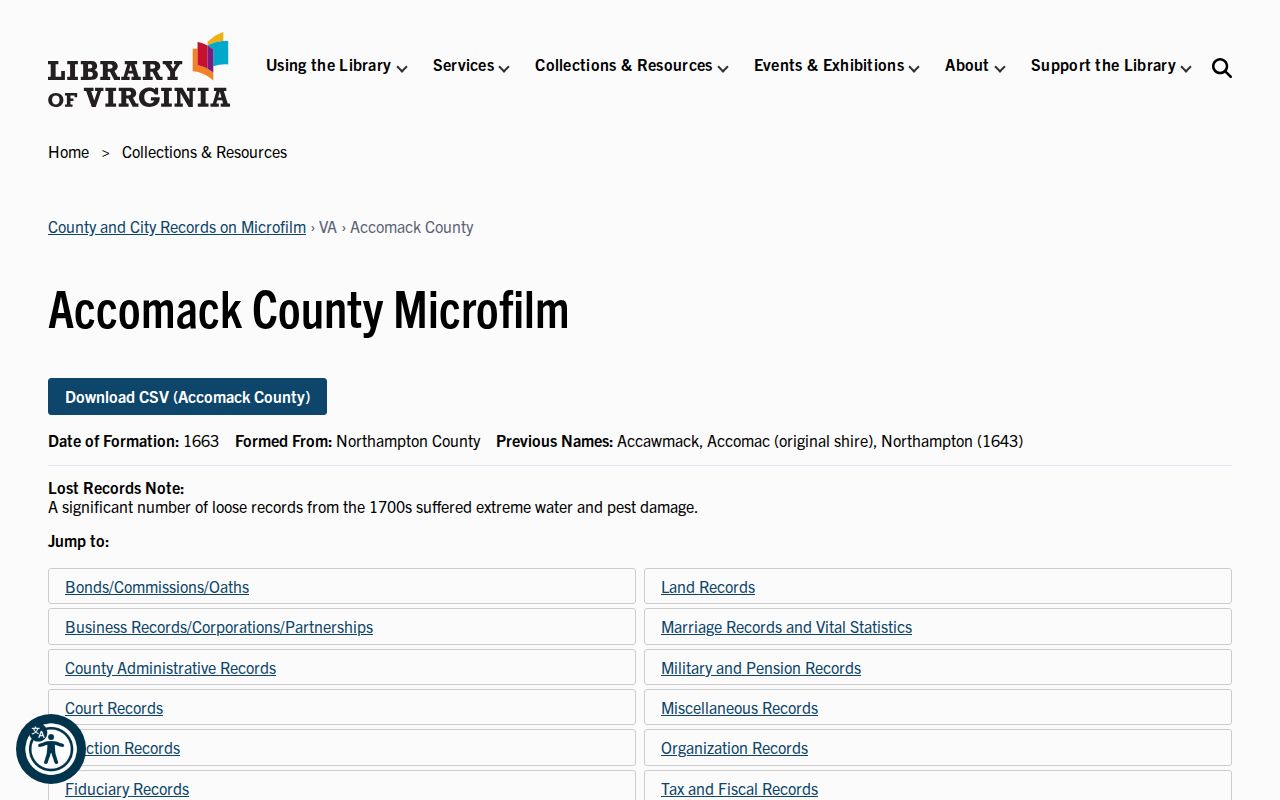
Use the catalog entry to find the right reel.
Accomack County Oyster Plats and Shore Records
The Library of Virginia's Accomack holdings include oyster plats drawn between 1894 and 1906. This Eastern Shore series is easy to overlook. A water-related land clue can sit in a plat. It may never surface in a modern street search. The same catalog holds surveyor records and land causes spanning several historic periods. An oyster plat may clarify a shore reference buried in an old deed. Check its title, date, and parcel relationship. Compare those details against the actual conveyance and a current survey before trusting it.
For any coastal tract, write down the old party names. Record the exact legal wording too. Then set the historic map beside later deeds, the current parcel number, and any recorded plat. Remember that a catalog entry only points to a collection. It does not promise that every image is online. Some pieces live only on microfilm, through interlibrary loan, or with archival help.
Accomack County Chancery and Land Causes
Chancery causes for Accomack are scanned across 1718-1912, and most of the series falls between 1870 and 1912. A boundary fight or an estate partition often explains a chain that seems broken. These case files add color to a deed record, though they never substitute for a later recorded conveyance. The Library of Virginia also catalogs land causes and surveyor records as separate runs.
Start with the index. Search by party name and case period. Then read the file for the property description, the heirs, any court orders, and what a commissioner did. Compare any resulting deed against the Clerk's current land record. Some sealed or protected material carries access limits, and the online index does not guarantee that every attachment has been digitized. The scanned Accomack chancery index covers the full local 1718-1912 range.
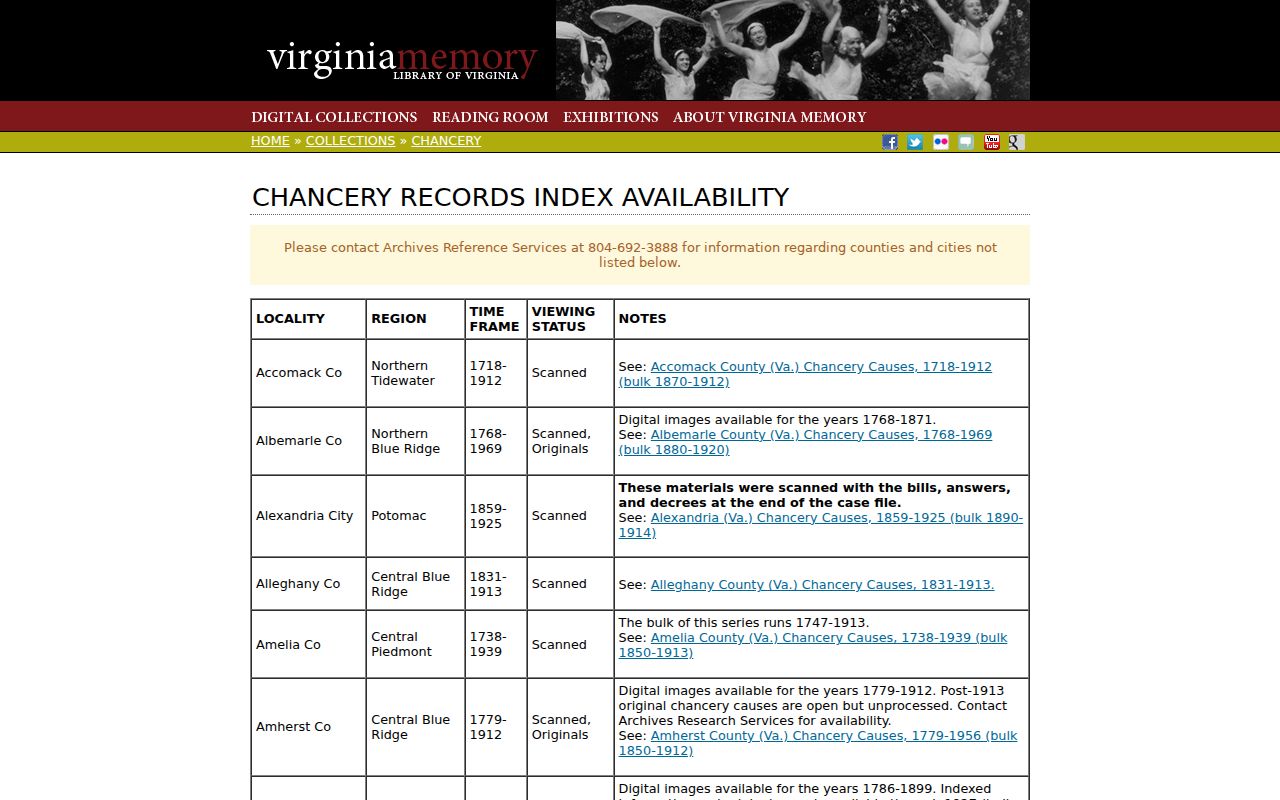
Treat a chancery cause as context. Confirm title changes in the deed books.
Accomack County Estate Transfers in a Chain
Estates move land constantly. An executor's, administrator's, or fiduciary deed carries a parcel from a deceased owner. It goes to the next holder. The Accomack Circuit Clerk keeps wills and probate files alongside the deed books and related instruments. Both halves of the transfer sit in one office. A probate file may reveal the executor's authority, the heirs, or an inventory. The recorded fiduciary deed then supplies the conveyance itself and its legal description. A death certificate, by contrast, only proves the event. It says nothing about who owned a particular parcel.
When the index name shifts to an estate or a representative, run two searches. Work the court file and the land-record index separately. Keep the probate case number next to the deed instrument. Compare descriptions and parcel references line by line. That discipline often closes a chain gap. It also keeps you from assuming. The person on an older assessment roll may not still hold title.
How Far Back Accomack County Ownership Records Go
Accomack's documented deed and will material reaches back to 1663. The Library of Virginia lists index runs and deed books from that year onward. The clerk's public-search tradition carries the same 1663 start. The earliest year covered by the modern SRA portal is unclear. Do not assume the portal reaches the entire historic collection. When an online search comes back empty, try the catalog, the Clerk, or the microfilm collection next.
Lawful use. Accomack County former-owner research supports house history, estate matters and property diligence. Do not use a chain of names to stalk or harass anyone.